


Category Archives: Technology
Intellectual Property Management for Business Owners

Source:https://a.storyblok.com
Five years ago, a promising SaaS founder came into my office, pale and holding a cease-and-desist letter. He had spent three years building a custom workflow automation platform, raised his seed round, and reached $1.2 million in ARR.
The problem? He had never secured the trademark for his brand name, nor had he properly assigned ownership of the source code written by his early freelance developers.
A competitor registered the trademark first and bought the rights to a crucial snippet of his underlying code from an disgruntled contractor. Overnight, my client was forced to rebrand, rewrite core software modules, and delay his Series A round. Cost of the oversight? Over $400,000 in legal fees and lost momentum.
That painful lesson illustrates a stark truth: Intellectual property management isn’t an obscure legal formality reserved for Fortune 500 giants. It is the invisible insurance policy that protects your business’s value, moat, and future exit valuation.
What Exactly Is Intellectual Property Management?
For many founders, “IP” sounds like a dense forest of legal jargon. But in practical business terms, managing your intellectual property is simply the systematic process of identifying, protecting, and monetizing your intangible assets.
Think of your business as a custom-built house. Your physical inventory, laptops, and office furniture are the bricks and mortar. Your intellectual property is the land title, architectural blueprint, and lock system.
Without proper titles and locks, anyone can walk in, copy your blueprint, and build the exact same house right next door—and you won’t have the legal standing to stop them.
┌─────────────────────────────────────────────────────────┐
│               YOUR INTELLECTUAL PROPERTY                │
├──────────────┬───────────────┬────────────┬─────────────┤
│  Trademarks  │   Copyrights  │  Patents   │ Trade Secrets│
│ (Brand/Logo) │(Content/Code) │(Tech/Design│(SOPs/Recipes│
└──────────────┴───────────────┴────────────┴─────────────┘
1. The Four Pillars of IP Every Business Owner Must Protect
To execute a solid strategy, you must first understand the four distinct categories of intangible assets you generate every day.
A. Trademarks (Brand Identity)
Trademarks protect brand identifiers—names, logos, taglines, and even specific brand colors or sound signatures. They tell the market that a product or service originates uniquely from you.
-
Examples: Brand name, product line titles, company logos.
-
Duration: Can last indefinitely as long as you maintain active commercial use and file renewals.
B. Copyrights (Creative Expressions)
Copyright automatically protects original works of authorship fixed in a tangible medium.
-
Examples: Website copy, software source code, marketing videos, user manuals, and training materials.
-
Key Insight: While protection is automatic upon creation, registering your copyright gives you critical legal leverage to claim statutory damages in court.
C. Patents (Functional Innovations)
Patents grant an exclusive right to an invention, preventing others from making, using, or selling it without permission.
-
Types: Utility patents (how something works) and Design patents (how something looks).
-
Trade-off: Patents require public disclosure of your tech in exchange for a limited monopoly (usually 20 years).
D. Trade Secrets (Proprietary Knowledge)
Trade secrets consist of confidential business information that provides a competitive edge precisely because it remains secret.
-
Examples: The Coca-Cola formula, proprietary search algorithms, client lists, and internal pricing formulas.
-
Protection Strategy: Non-Disclosure Agreements (NDAs), strict access permissions, and robust cyber hygiene.
2. Conducting an Internal IP Audit: Where Is Your Value Hidden?
In my consulting work with mid-stage companies, I always start with an IP audit. You cannot manage what you haven’t cataloged. Most founders are shocked to discover how much vulnerable value is floating around unsecured.
| IP Asset Type | What to Audit | Common Vulnerability | Action Required |
| Brand Assets | Logos, slogans, product names | Unregistered trademarks in target markets | File USPTO / WIPO trademark applications |
| Software & Media | Source code, blogs, design templates | Contractors retained ownership rights | Execute IP Assignment Agreements retroactively |
| Operational Knowledge | Client lists, formulas, SOPs | Unsecured cloud storage, no NDAs | Enforce strict RBAC (Role-Based Access Control) |
| Inventions | Proprietary hardware, workflows | Prior public disclosure before filing | File provisional patents before public announcements |
Pro Tip: Set up a bi-annual IP audit. Every time you launch a new product, hire a key executive, or expand into a new country, update your intellectual property registry immediately.
3. The Contractor Trap: Who Actually Owns Your Code and Content?
One of the most dangerous misconceptions in intellectual property management is the belief that “If I paid for it, I own it.” Under copyright law in many jurisdictions, that is simply false.
If an independent contractor creates a logo, writes software code, or designs a marketing campaign for you without a specific contract clause, they retain the copyright. You merely own a non-exclusive license to use it.
[ Pays Freelancer ] ──> (No IP Assignment Clause) ──> Contractor Owns Copyright!
[ Pays Freelancer ] ──> (With IP Assignment Clause) ──> YOUR COMPANY Owns Copyright!
How to Secure Your Work-for-Hire Assets:
-
IP Assignment Provisions: Every contract with freelancers, agencies, and full-time employees must explicitly state that all work product is a “work made for hire” and that all IP rights are fully assigned to your company upon creation.
-
Invention Assignment Agreements: Ensure employees sign agreements transferring rights to any innovations created using company resources or during employment hours.
4. Building an Active Defense and Enforcement Strategy
Filing for trademarks and patents is only half the battle. Government registry offices do not police the market for you—it is your responsibility to monitor and enforce your rights.
Hidden Pitfall: Trademark Dilution and Abandonment
If you ignore competitors or rogue actors using names or logos confusingly similar to yours, you risk losing your legal rights entirely through trademark dilution. You must actively police your brand perimeter.
Defensive Tactics:
-
Set Up Brand Monitoring Alerts: Use Google Alerts and automated trademark watch services to catch unauthorized filings or domain squatting early.
-
Issue Cease-and-Desist (C&D) Letters Promptly: Address infringements early with polite, firm legal notices before issues escalate to litigation.
-
Establish Clear Internal SOPs: Train your sales, marketing, and product teams on how to use trademark symbols ($\text{TM}$ and $\text{\textregistered}$) and keep confidential data strictly segregated.
Protect Your Moat Before You Build the Castle
Building a successful business without robust intellectual property management is like building a skyscraper on a foundation of sand. You might reach impressive heights, but a single legal wave can collapse the structure.
By conducting regular audits, securing written assignments from all contributors, and registering your core brand assets early, you convert vulnerable operational ideas into enterprise value that investors, partners, and buyers will respect.
Understanding Technology Transfer Processes in Business
A brilliant university lab spends five years and millions of dollars developing a revolutionary, energy-efficient battery material. It works flawlessly in a sterile, controlled environment on a tiny scale. Yet, when a manufacturing giant buys the rights to scale it up, the first production run turns into a costly, defective mess that completely stalls the factory line.
In my ten years of navigating the intersection of corporate strategy and commercialization, I have watched this painful bottleneck happen over and over again. Companies frequently assume that acquiring cutting-edge intellectual property is the hard part. The brutal reality is that buying the recipe is entirely different from actually baking the cake at scale.
Navigating the intricacies of technology transfer processes is what separates market leaders from businesses that burn capital on unusable innovations. It is the complex, highly strategic pipeline that moves scientific discoveries, proprietary software, and manufacturing methodologies from their point of origin into profitable, real-world commercial applications. Let’s unmask how this operational bridge works and how your business can execute it flawlessly.
The Operational Pipeline of True Innovation
Think of the tech transfer journey like a baton pass in an Olympic relay race. It doesn’t matter how fast the first runner is if they drop the baton during the handoff, or if the second runner doesn’t know which direction to sprint.
In the corporate ecosystem, the first runner is usually a university research center, a specialized R&D lab, or an acquired startup. The second runner is your operations, product engineering, and manufacturing team.
When a handoff fails, it is rarely because the underlying science is bad. It fails because of a lack of operational alignment, poor documentation, or an architectural mismatch between the origin lab and the commercial factory floor. Successful organizations build a highly structured framework to ensure that the intellectual asset retains its full value during the move.
Deconstructing the Stages of Technology Transfer Processes
Moving a technical asset out of its native environment requires a systematic approach. You cannot simply hand over a hard drive of blueprints and hope for the best; you must guide the asset through a deliberate lifecycle.
Stage 1: Invention Disclosure and Evaluation
The pipeline officially begins when the inventing entity formally documents the discovery. This initial assessment looks beyond the pure science to analyze the commercial viability, market demand, and potential production costs.
During this stage, legal and business teams collaborate to determine the patentability of the asset. You must answer a fundamental question: Does this technology solve a broad, lucrative market pain point, or is it an expensive engineering novelty?
Stage 2: Protecting Intellectual Property Rights
Before any technical data changes hands, you must secure robust legal protection. This involves filing comprehensive patents, establishing clear trademarks, and defining strict trade secrets.
A well-protected asset establishes a clear competitive moat for the acquiring business. Without this legal foundation, any competitor could reverse-engineer your newly transferred process, destroying your first-mover advantage instantly.
Stage 3: Licensing and Commercialization Strategy
Once the asset is legally insulated, the inventing entity and the acquiring business negotiate the transfer terms. This typically results in a formal licensing agreement or a complete IP acquisition.
These contracts outline upfront fees, ongoing royalty structures, and field-of-use restrictions. The goal is to align incentives so that both the creators and the commercializers benefit proportionally as the product gains market share.
Stage 4: Operational Implementation and Scaling
This is where the rubber meets the road and where my team spends the bulk of our energy. Your engineering division must absorb the technical specifications and translate them into a repeatable manufacturing blueprint.
This stage frequently requires designing customized tooling, training production line staff, and establishing rigorous quality control protocols. Success is achieved when the new technology can be produced consistently within your target cost-of-goods-sold (COGS) parameters.
Bridging the Gap Between Research and Production
The absolute biggest hurdle in this journey is the cultural and linguistic divide between research scientists and industrial engineers. Scientists optimize for theoretical perfection and edge-case performance; engineers optimize for high throughput, safety, and strict cost controls.
To successfully bridge this gap, you must establish a dedicated cross-functional transition team. This team should include software architects, manufacturing leads, legal counsel, and product managers who can act as translators between both worlds.
Instead of a cold handoff of static documentation, arrange for joint workshops where the original inventors work side-by-side with your manufacturing team. This physical or collaborative overlap allows your staff to absorb the unwritten nuance—the subtle tribal knowledge—that never makes it into an official instruction manual.
Pro Tip: Never underestimate the importance of data formatting uniformity during an integration. I once saw a multi-million dollar software integration grind to a halt for three weeks because the source R&D team used a legacy data structure that completely crashed the acquiring company’s modern cloud infrastructure. Always run a comprehensive technical audit of the incoming data architecture before signing the final acquisition contract.
Navigating the Legal and Financial Realities
Executing this process requires a deep familiarity with complex legal instruments and financial structures. It is a highly specialized business discipline that demands absolute precision.
-
Technology Transfer Agreements (TTAs): The core legal contracts that explicitly dictate how knowledge, software, or manufacturing rights are shared, utilized, and restricted between parties.
-
Material Transfer Agreements (MTAs): Specialized contracts used when physical biological materials, chemical compounds, or physical prototypes are shipped from a lab to a corporate test facility.
-
Joint Venture (JV) Structuring: In complex scenarios, companies may form an entirely new corporate entity with the research institution to co-develop and share the financial upside of the emerging technology.
Tracking the Operational Metrics of a Handoff
To evaluate whether your investment is actually yielding a positive return, your management team must track specific operational performance indicators.
-
Time-to-Commercialization (TTC): The total number of months it takes from executing the licensing agreement to launching a viable product in the market.
-
Knowledge Absorption Rate: A qualitative metric tracking how quickly your internal engineering team can modify and troubleshoot the new technology without relying on the original inventors.
-
Yield and Defect Rates: Tracking whether the transferred manufacturing process maintains its structural integrity and efficiency when shifted from low-volume prototyping to mass production.
Preparing Your Business for Exponential Growth
Mastering the mechanics of technology transfer is what allows a business to bypass years of expensive, unpredictable internal research and leapfrog directly to the cutting edge of their industry. It gives you the power to acquire raw innovation and turn it into a scalable, high-margin market success.
By treating the process as a collaborative, highly planned relay race rather than a transactional handoff, you protect your capital, empower your engineering teams, and maximize the value of your intellectual investments.
Does your organization currently have a clear blueprint for onboarding external innovations, or are your teams struggling to translate raw intellectual property into market-ready products? Let’s talk about your biggest technical integration challenges in the comments below.
Research and Development Strategies That Drive Innovation
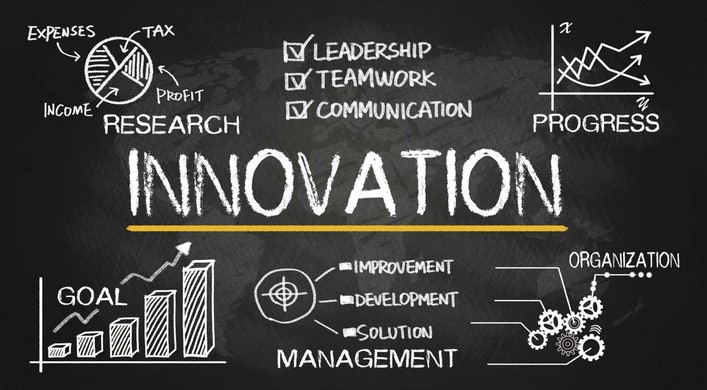
Source:https://www.acceptmission.com
In today’s rapidly evolving business landscape, companies must continually innovate to stay competitive and meet the ever-changing needs of their customers. One of the key drivers of innovation is effective research and development strategies. These strategies enable businesses to explore new ideas, improve existing products, and create groundbreaking technologies. Research and development (R&D) serves as the backbone for companies seeking long-term success by fostering creativity, advancing technology, and boosting profitability.
This article will explore various research and development strategies that can foster innovation within organizations. We will dive into the importance of R&D, examine different approaches, and highlight best practices for creating a culture of innovation that drives future growth and competitive advantage.
The Importance of Research and Development in Driving Innovation
Research and development are at the heart of technological advancement and product improvement. Investing in R&D enables businesses to solve problems, refine processes, and meet consumer demands in ways that have not been done before. While R&D can require significant resources, the payoff is immense in terms of new products, improved efficiencies, and enhanced market position.
R&D serves multiple functions, including:
- Product Innovation: Creating new products or improving existing ones to meet market needs or explore new opportunities.
- Process Optimization: Streamlining operations and enhancing productivity through better technologies and systems.
- Competitive Advantage: Developing unique offerings that set your company apart from competitors.
- Market Leadership: By staying ahead of industry trends and pioneering new solutions, companies can position themselves as leaders.
For businesses looking to excel in their industry, having strong research and development strategies is not a luxury—it’s a necessity. Let’s take a closer look at some key strategies that can help businesses leverage R&D to drive innovation.
Key Research and Development Strategies for Innovation
1. Open Innovation and Collaboration
One of the most effective research and development strategies is open innovation. Open innovation involves collaborating with external partners such as universities, research institutions, startups, or even competitors to accelerate innovation. By embracing this collaborative approach, businesses can tap into a broader pool of ideas, expertise, and resources. Open innovation can lead to faster problem-solving and the development of more creative and diverse solutions.
Benefits of Open Innovation:
- Access to External Expertise: Collaboration with external parties provides access to new knowledge and technologies that may not exist internally.
- Shared Risks and Costs: Partnering with other organizations can spread the financial and operational risks of R&D projects.
- Faster Time-to-Market: External collaboration can accelerate the product development process and bring innovations to market faster.
Examples of open innovation in action include companies that establish partnerships with universities for research or those that hold crowdsourcing challenges to invite ideas from the public or other professionals in their field.
2. Agile Development and Iterative Prototyping
Agile development is another R&D strategy that encourages flexibility and rapid iteration. Unlike traditional, linear product development processes, agile focuses on continuous improvement through short development cycles or sprints. This allows for constant testing, feedback, and refinement, which is especially valuable in industries where customer preferences and technological advancements change quickly.
Agile methods also allow teams to respond to changing market conditions and customer demands more swiftly. By incorporating iterative prototyping into the process, businesses can test ideas, gather feedback, and make adjustments before fully committing to a product release.
Key Aspects of Agile Development:
- Short Sprints: Work is divided into small, manageable chunks (sprints), with progress assessed at the end of each sprint.
- Customer Feedback: Regular input from customers and stakeholders is integrated into the process to ensure that the product meets their needs.
- Continuous Refinement: Rather than aiming for perfection from the outset, agile allows for ongoing improvements and adjustments throughout the development cycle.
For companies focused on high-tech industries or software development, agile R&D is particularly useful in maintaining a competitive edge in fast-moving markets.
3. Data-Driven Innovation
In the digital age, data is one of the most valuable assets companies can leverage for innovation. By analyzing customer data, market trends, and internal performance metrics, businesses can uncover insights that inform R&D efforts. Data-driven innovation involves using these insights to guide the development of new products, refine existing offerings, and improve the customer experience.
This strategy may involve the use of advanced technologies such as artificial intelligence (AI), machine learning, and big data analytics to process vast amounts of data quickly and accurately. These tools can help identify patterns, predict market trends, and even suggest potential product features based on consumer behavior.
Implementing Data-Driven Innovation:
- Collect Relevant Data: Companies should focus on gathering both structured and unstructured data from various sources such as customer interactions, website visits, and social media activity.
- Analyze and Interpret: Use data analytics tools to uncover actionable insights, trends, and opportunities for improvement.
- Use Predictive Analytics: Predict future market demands and behaviors based on historical data to guide decision-making in the R&D process.
By embracing data-driven innovation, companies can develop products and services that better meet the needs of their target market, leading to a higher chance of success in the marketplace.
Creating a Culture of Innovation
While having the right research and development strategies is crucial, fostering a culture of innovation within an organization is equally important. Innovation doesn’t happen in a vacuum—it requires a supportive environment where creativity is encouraged, risks are taken, and new ideas are welcomed. To create such a culture, businesses should:
Encourage Cross-Disciplinary Collaboration
Innovation often arises when individuals from different fields of expertise come together to solve a problem. Encouraging cross-disciplinary collaboration can spark new ideas, as employees bring different perspectives to the table. For example, pairing engineers with marketers or data scientists with product designers can lead to breakthrough innovations.
Provide Time and Resources for Experimentation
Allowing employees time and resources to experiment with new ideas—whether through hackathons, innovation labs, or dedicated R&D time—can foster a more innovative mindset. This freedom to explore new concepts without the immediate pressure of results can lead to unexpected and valuable discoveries.
Reward Innovation and Risk-Taking
Recognizing and rewarding employees for their innovative ideas and successful projects motivates others to think creatively. This could be through formal recognition programs, financial incentives, or career advancement opportunities. Encouraging risk-taking and viewing failures as learning experiences is also key to building an innovation-driven culture.
In conclusion, research and development strategies play a pivotal role in driving innovation and business growth. By leveraging techniques such as open innovation, agile development, and data-driven decision-making, companies can stay ahead of the curve and continuously deliver value to their customers. However, the most effective R&D strategies go beyond just the processes and tools—they require a company-wide commitment to fostering a culture of creativity, collaboration, and experimentation. When businesses embrace these strategies, they position themselves for long-term success, ensuring that they remain leaders in their respective industries while consistently delivering innovative solutions to their customers.