


Category Archives: Digital Marketing
Tips for Optimizing Email Open Rates in Campaigns

Source:https://resources.americaneagle.com
You’ve spent three days crafting the perfect marketing copy. You carefully selected the product images, fine-tuned the promotional offer, and labored over the call-to-action button until it was pixel-perfect. With a mixture of pride and excitement, you finally hit “Send” to blast your campaign to 10,000 subscribers. Twenty-four hours later, you log back into your dashboard, expecting a wave of sales, only to find a devastating metric staring back at you: a pathetic 11% open rate.
That means nearly 9,000 people didn’t even bother to open the door to look at what you built.
Over my ten-plus years as a digital marketer and business consultant, I have sat in front of those exact disappointing dashboards. I have watched entrepreneurs pour thousands of dollars into building lists, only to see their messages die a quiet death in the dark corners of the spam folder. The truth that only industry veterans understand is that getting your email opened is a highly competitive, psychological, and technical chess match.
If you want to stop wasting your creative energy and start driving real revenue, you need an actionable strategy for email open rate optimization. Let’s dismantle the mechanics of the modern inbox and look at how to double your open rates.
The Inbox Battleground: Why Open Rates Matter More Than Ever
Before we touch a single line of copy, we need to understand the structural layout of a modern inbox. Internet Service Providers (ISPs) like Gmail, Yahoo, and Outlook act like elite, hyper-protective nightclub bouncers.
Every single day, billions of emails try to squeeze through the front door. The bouncer’s job is to keep the garbage out so the club guests (your subscribers) have a premium experience.
If your marketing campaigns display poor technical hygiene or look like spam, the bouncer will silently toss your message into the dumpster—colloquially known as the “Spam” or “Promotions” tab.
When executing email open rate optimization, we are trying to win the approval of both the machine algorithm and the human recipient. A healthy, cross-industry benchmark open rate sits around 20% to 22%. If your campaigns are dipping below 15%, your infrastructure is sending out warning flares.
Critical Strategies for Reliable Email Open Rate Optimization
To turn your metrics around, we need to address the three primary visual elements a subscriber sees before deciding to click: the sender name, the subject line, and the preview text.
1. Humanize the “Friendly From” Name
One of the easiest, yet most frequently overlooked levers in email marketing is the sender name. If your emails are coming from a cold, corporate brand name like “Sales Team” or “Info@YourCompany.com,” your open rates will suffer.
People do not build deep emotional relationships with faceless corporations; they build relationships with people. Change your sender configuration to a personal format, such as “Sarah from [Brand Name]” or simply your full name. In my personal testing across consumer software campaigns, changing a corporate from-name to a humanized name yielded an immediate 14% lift in unique opens.
2. Master the Psychology of the Subject Line
Your subject line is the hook that reels the fish in. If it’s boring, vague, or overly promotional, it’s dead on arrival.
-
Keep it Short: Most mobile screens cut off text after 40 to 50 characters. Place your most compelling, action-oriented words right at the beginning.
-
Avoid Spam Triggers: Aggressive words like “FREE,” “BUY NOW,” “GUARANTEED,” or using multiple exclamation points (!!!) will alert spam filters instantly.
-
Leverage Curiosity or Urgency: Give the reader an incomplete puzzle that they can only solve by clicking inside. For example, “We fixed our biggest mistake…” out-performs “Check out our updated policy” every single day.
3. Treat Preview Text Like an Extension of Your Headline
The preheader or preview text is the snippet of copy that displays right next to or below your subject line in the inbox preview. Most beginners leave this blank, allowing the email client to pull random text like “View in web browser” or “Click here to unsubscribe.”
Think of your subject line and preview text as a one-two punch combination. If the subject line creates curiosity, the preview text should deliver a compelling hint that seals the deal.
+------------------------+--------------------------+--------------------------+
| Email Element          | Poor Execution (Spammy)  | Elite Execution (Human)  |
+------------------------+--------------------------+--------------------------+
| Sender Name            | NO-REPLY@COMPANY.COM     | Marcus @ Elite Automotive|
| Subject Line           |!!!50% OFF TODAY ONLY!!!  | A quick favor? (Closes   |
|                        |                          | tonight)                 |
| Preheader/Preview      | Having trouble viewing   | I opened up 5 extra slots|
|                        | this email? Click here.  | just for our readers.    |
+------------------------+--------------------------+--------------------------+
Technical Hygiene: Securing Your Sender Reputation
You can write the most breathtaking copy in the history of advertising, but it won’t matter if your emails never physically reach the inbox. This is where technical email authentication comes into play.
To maximize your deliverability, your business domain must have three essential DNS records configured correctly with your web host:
-
SPF (Sender Policy Framework): A public list of specific IP addresses that are officially authorized to send mail on behalf of your domain name.
-
DKIM (DomainKeys Identified Mail): A digital, cryptographic signature added to your email headers that proves the message wasn’t intercepted or modified mid-transit.
-
DMARC (Domain-based Message Authentication, Reporting, and Conformance): A strict instruction manual telling receiving servers exactly what to do if an email fails SPF or DKIM checks.
Expert Advice: The Danger of Bloated, Dead Lists
The Low Engagement Spiral
Many intermediate marketers brag about the sheer size of their email list. This is a vanity metric that can destroy your brand.
Modern ISPs track recipient behavior over time. If you continuously send emails to thousands of people who haven’t opened or clicked a single message from you in over six months, Gmail’s algorithms will conclude that your content is low-value. They will systematically begin routing your future campaigns away from the main inbox and straight into the Promotions tab for all of your subscribers.
Pro Tip: Run a list-cleaning automation every 90 days. Isolate subscribers who have been completely inactive for 3 to 6 months, send them a high-value “Win-Back” campaign, and if they still don’t engage, ruthlessly remove them from your active sender list. Keeping your list lean and highly responsive ensures your domain reputation remains pristine.
Unlock Your Campaign’s True Potential
Consistently hitting high open rates isn’t a matter of luck—it is a discipline. By humanizing your sender identity, treating your subject lines like high-stakes advertising real estate, auditing your technical authentication records, and maintaining clean list hygiene, you can comfortably push past industry averages. Stop letting your valuable insights go unnoticed behind a closed digital door.
What is the average open rate you are seeing on your business campaigns right now? Are you currently struggling to get out of the promotions tab, or are you trying to figure out how to write better subject lines for mobile users? Leave a comment below, and let’s look at your copy together!
Content Calendar Planning for Consistent Marketing

Source:https://impact.com
It is Monday morning at 9:00 AM. Your morning coffee is hot, but your mind is completely blank as you stare at a flashing cursor on an empty screen. You know your brand needs to publish something today to keep the algorithm happy, but you have no idea what to say. In a rush, you pull together a generic graphic, throw in a couple of uninspired hashtags, and hit publish—only to watch it generate zero engagement.
In my ten years of managing digital marketing engines, I have seen this exact panic cycle destroy the momentum of countless growing brands. Companies frequently treat content creation like an emergency reaction rather than a disciplined business operation. The brutal reality of modern media is that sporadic, adrenaline-fueled posting schedules do not build communities or drive corporate revenue.
Mastering strategic content calendar planning is what separates chaotic marketing departments from highly profitable brands. It is the architectural blueprint that transforms creative chaotic energy into a predictable, conversion-focused asset pipeline. Let’s explore how to build a scalable editorial workflow that protects your team from creative burnout while maximizing your marketing ROI.
The Operational Mechanics of Content Consistency
Think of your brand’s content engine like a professional restaurant kitchen. A high-end kitchen never waits for a guest to sit down before deciding what ingredients to buy, chop, and cook. If they operated that way, the kitchen would collapse into total chaos during the first dinner rush. Instead, they rely on prep work—slicing vegetables, marinating proteins, and organizing stations hours before the doors ever open.
Your marketing output requires the exact same level of operational prep work. A well-constructed editorial calendar functions as your marketing kitchen’s prep station. It allows you to batch your conceptual thinking, streamline your asset production, and schedule your distributions weeks in advance.
When you shift from a reactive “what should we post today?” mindset to a proactive framework, your quality skyrockets. You gain the cognitive space needed to weave deeper narrative arcs into your copy, optimize your call-to-action structures, and align your distribution channels with your actual business revenue goals.
Deconstructing the Stages of Content Calendar Planning
Building a sustainable publication schedule requires moving beyond a simple list of dates and titles on a spreadsheet. You need a comprehensive workflow that tracks an idea from a raw brainstorm to a fully optimized live asset.
Stage 1: Establishing Content Pillars and Core Themes
Before mapping out individual days, you must establish your foundational content pillars. These are the 3 to 5 broad macro-topics that your brand has a legitimate authority to speak on.
If you run an enterprise software company, your pillars might be industry data trends, customer case studies, and actionable product tutorials. Restricting your brainstorms to these explicit pillars ensures your brand building remains tightly focused, preventing you from confusing your target audience with irrelevant topics.
Stage 2: Mapping the Editorial Workflow and Production Stages
A functional calendar must clearly track the operational status of every single asset in your pipeline. It should act as a visual status board for your creative team.
-
Ideation/Backlog: A holding zone for raw topics, search engine research, and user requests that haven’t been assigned a publication date yet.
-
In Production: Copywriters, graphic designers, and video editors are actively building the raw creative components.
-
Review/Approval: Subject matter experts and editors verify the technical accuracy, brand voice compliance, and SEO formatting.
-
Scheduled/Live: The content is locked into your distribution software and ready to deploy automatically to your channels.
Stage 3: Organizing Channels and Distribution Scheduling
Once your assets enter production, your calendar should map out exactly how that core piece of media will be repurposed across your entire distribution ecosystem.
A single deep-dive industry report should not just live as a lonely PDF on your website. Your scheduling framework should outline how that report will be sliced into a newsletter feature, a series of short-form social media videos, and multiple text-based authority posts over the course of a month.
Striking the Balance Between Automation and Real-Time Relevance
The biggest mistake mid-market marketing teams make is turning their editorial calendar into an unbreakable prison. They schedule out three months of rigid promotional content, completely blinding themselves to shifting market dynamics or sudden industry news.
Your planning framework should function like a flexible grid, not a block of concrete. Use automated scheduling for your evergreen educational pieces, system tutorials, and core brand stories. This builds a reliable baseline of visibility that keeps your channels healthy.
Leave a dedicated 20% buffer in your weekly schedule to accommodate spontaneous industry changes, trending conversations, or immediate customer feedback. If an unexpected industry shift occurs on a Wednesday, you must have the operational agility to pause your automated promotional queue and address the immediate needs of your community.
Pro Tip: Never fall into the trap of measuring marketing success purely by production volume. Publishing five low-quality, rushed articles a week will actively damage your search rankings and alienate your subscribers. Prioritize depth and distribution efficiency over raw frequency; it is far better to publish one masterclass piece of media a week and distribute it brilliantly across five channels than to spray uninspired noise into the market every day.
Choosing the Right Tech Stack for Your Editorial Workflow
You do not need to invest in overly complex enterprise software to build a world-class production tracking system. Start with tools that naturally fit the current technical comfort level of your team.
-
For Small Teams and Solopreneurs: Simple visual tracking tools like Trello, Notion, or Airtable allow you to build clean Kanban boards that track your assets through production stages with zero learning curve.
-
For Growing Agencies and Mid-Market Brands: Dedicated marketing management suites like Asana, ClickUp, or CoSchedule offer advanced dependency tracking, team workload views, and automated approval reminders.
-
For Native Distribution Scheduling: Platforms like Buffer, Later, or Hootsuite allow you to connect your calendar directly to your social API feeds, publishing your finished assets automatically at optimal engagement times.
Tracking the Metrics of a Sustainable Content Engine
To prove that your editorial planning is actually moving the needle for your business, your leadership team must look past superficial metrics like “likes” and track operational performance.
-
Production Lead Time: The average number of days it takes for an asset to move from an approved idea to a fully completed piece of media.
-
Calendar Compliance Rate: The percentage of scheduled assets that actually launch on their designated publication date without delays or quality issues.
-
Asset Repurposing Efficiency: Tracking how many individual social touchpoints and lead-generation assets your team successfully extracts from a single piece of long-form media.
Transforming Your Marketing from an Emergency to an Asset
A disciplined approach to content calendar planning completely changes the energy of a marketing department. It replaces the anxiety of the daily blank page with the quiet confidence of a fully stocked creative pipeline. It gives your enterprise the stability to nurture your audience consistently, establishing your brand as a reliable authority in your niche over the long term.
By putting the proper production structures, content pillars, and tracking tools in place today, you stop chasing the algorithm and start building a systematic media asset that reliably feeds your business growth.
How far in advance is your marketing team currently looking? Are you still operating on a stressful, day-by-day survival schedule, or are you ready to build a scalable editorial engine that runs on predictable, long-term strategy? Let’s map out your production bottlenecks and calendar goals in the comments below.
Inbound Marketing Tactics That Attract and Convert
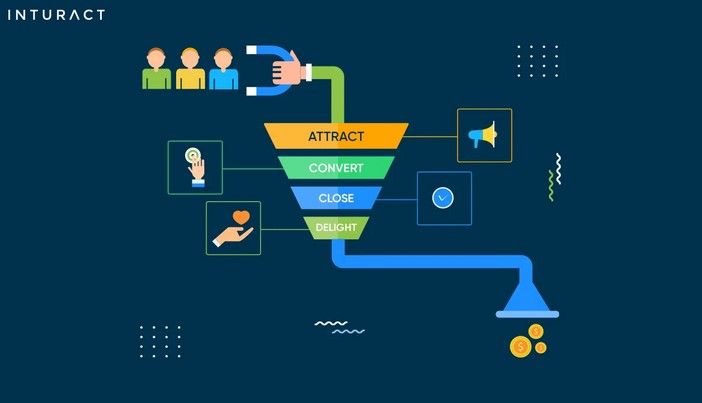
Source:https://www.inturact.com
In the digital age, attracting and converting customers has become more sophisticated than ever. Traditional marketing methods like cold calls, interruptive ads, and direct mail are increasingly ineffective in a world where consumers have the power to filter out unwanted messages. This is where inbound marketing tactics come into play. Inbound marketing is a strategy that focuses on creating valuable content and experiences that naturally attract potential customers to your business, rather than forcing your message on them. By providing helpful, informative, and engaging content, inbound marketing helps establish trust with your audience, guide them through the buyer’s journey, and ultimately convert them into loyal customers. In this article, we will explore several powerful inbound marketing tactics that can attract, engage, and convert prospects into long-term clients.
Understanding Inbound Marketing and Why It Works
At its core, inbound marketing is about building relationships with your customers over time. It differs from traditional marketing by focusing on earning the attention of potential customers rather than buying it. Through inbound marketing, businesses can establish themselves as trusted authorities in their industry, creating a strong online presence that encourages organic growth.
The key to inbound marketing’s success lies in understanding your customers’ needs, providing them with the right content at the right time, and nurturing them through their buying decision process. By attracting visitors with high-quality content and strategically engaging with them throughout their journey, businesses can convert leads into customers and ultimately turn those customers into advocates.
For businesses to effectively use inbound marketing tactics, it’s important to focus on three core stages: attracting visitors, engaging with them, and delighting them to encourage conversion and long-term loyalty.
Effective Inbound Marketing Tactics for Attracting and Converting
1. Content Creation and Blogging
One of the most powerful inbound marketing tactics is content creation, particularly through blogging. Blogging not only provides value to your audience but also boosts your search engine rankings, making it easier for prospects to find you online. By consistently publishing high-quality, informative content related to your industry, you can position your business as an expert and trusted resource in your field.
Action Steps:
- Start by identifying topics that your target audience is interested in or challenges they are facing. These could be questions, how-tos, or insights related to your industry.
- Focus on creating long-form, evergreen content that answers these questions thoroughly, providing value to your readers.
- Optimize each blog post for SEO by including relevant keywords, using appropriate meta descriptions, and linking internally to other related posts on your site.
The more valuable content you provide, the more likely you are to attract visitors to your website and convert them into leads. Additionally, having a blog allows you to engage with your audience regularly, building a stronger relationship over time.
2. Lead Magnets and Email Campaigns
Once you’ve attracted visitors to your website through valuable content, the next step is to convert them into leads. This can be achieved through lead magnets, which are incentives offered in exchange for a visitor’s contact information (such as an email address). Common examples of lead magnets include eBooks, whitepapers, webinars, templates, and checklists.
Action Steps:
- Create high-value lead magnets that solve a specific problem for your target audience. Ensure that the content is relevant to the blog post or landing page visitors are viewing.
- Use clear and compelling calls-to-action (CTAs) to encourage visitors to download your lead magnet. Place CTAs strategically throughout your site, such as at the end of blog posts or in pop-up forms.
- Once you’ve gathered leads, nurture them with personalized email campaigns. Use segmentation to send tailored content based on where they are in the buyer’s journey, and provide additional resources that will help them move closer to making a purchase decision.
Email campaigns that are personalized, timely, and relevant help keep your leads engaged, increasing the chances of conversion. By offering value through educational content and exclusive offers, you can establish trust and move prospects through your sales funnel.
3. Social Media Marketing and Engagement
Social media is a powerful tool for inbound marketing as it allows businesses to interact directly with their audience. Not only can you share your content and engage with followers, but social platforms also provide an opportunity to listen to your audience and gather valuable feedback.
Action Steps:
- Choose the social media platforms that are most relevant to your audience. For example, LinkedIn may be ideal for B2B businesses, while Instagram or Pinterest might be more effective for visually-oriented brands.
- Share your blog posts, infographics, videos, and other content to drive traffic to your website. Don’t just post promotional material—engage with your audience by asking questions, running polls, and responding to comments.
- Leverage social media advertising to further amplify your reach. Paid ads on platforms like Facebook, Instagram, or LinkedIn can help you target specific demographics, driving traffic to your website or lead capture pages.
Social media isn’t just about broadcasting your message; it’s about creating a conversation with your audience. When used strategically, it can amplify your inbound marketing efforts and foster deeper connections with your audience.
4. Search Engine Optimization (SEO)
SEO is essential for ensuring your content gets discovered by the right people. Without SEO, even the best content can go unnoticed. Optimizing your website and blog posts for search engines ensures that your content ranks higher in search results, making it easier for prospects to find you when they search for information related to your products or services.
Action Steps:
- Conduct keyword research to identify the phrases and terms your target audience is searching for. Tools like Google Keyword Planner, SEMrush, or Ahrefs can help you discover valuable keywords.
- Optimize your on-page SEO by incorporating your target keywords in key areas such as titles, headers, meta descriptions, and image alt text.
- Focus on improving user experience (UX) by ensuring your website is fast, mobile-friendly, and easy to navigate. Google rewards websites that provide a positive UX with higher rankings.
SEO is a long-term strategy, but when executed correctly, it can significantly increase the organic traffic to your website, providing a consistent stream of potential leads.
5. Customer Reviews and Testimonials
Finally, one of the most effective ways to convert prospects into customers is through social proof. Customer reviews, testimonials, and case studies build trust and credibility by showcasing your success stories and the positive experiences of past clients.
Action Steps:
- Encourage happy customers to leave reviews on platforms such as Google, Yelp, and Trustpilot. Feature these reviews prominently on your website and landing pages.
- Create in-depth case studies that highlight how your product or service helped solve a customer’s problem. Share these case studies on your blog, email campaigns, and social media.
- Use video testimonials for an added layer of authenticity and engagement. Video allows prospects to connect more personally with your satisfied customers.
Social proof is a powerful tool in the conversion process. When potential customers see that others have had positive experiences with your brand, they are more likely to trust you and move forward with a purchase.
Incorporating effective inbound marketing tactics into your overall marketing strategy is essential for attracting, engaging, and converting leads into loyal customers. From content creation and lead magnets to social media marketing and SEO, the tactics discussed in this article provide a comprehensive approach to inbound marketing that will help your business build relationships with your target audience and guide them through the buyer’s journey. By focusing on creating value and nurturing trust, inbound marketing allows businesses to attract qualified prospects, increase conversion rates, and foster long-term customer loyalty.