


Category Archives: Market
How to Use Industry Benchmarking to Stay Competitive

Source:https://media.sproutsocial.com
I once sat in a mid-sized manufacturing firm where the owner was celebrating a “record-breaking” year. His net profit margin had hit 8%, and he was ready to hand out bonuses. But when we pulled up the latest sector report, the room went silent. Every single one of his direct competitors was operating at a 14% margin with 20% less overhead.
What felt like a victory was actually a slow-motion car crash. He wasn’t winning; he was just losing more slowly than he had the year before. This is the danger of operating in a vacuum. Without industry benchmarking, you are essentially sailing a ship without a horizon—you might be moving, but you have no idea if you’re about to be overtaken or if you’re heading toward a reef.
In my decade of consulting, I’ve found that the difference between “surviving” and “dominating” often comes down to how a leader uses data to compare their performance against the field.
The “Gym” Analogy: Why Comparison Matters
Think of industry benchmarking like going to the gym. If you only ever lift weights in your basement, you might feel incredibly strong. You see your progress, and you’re proud.
However, the moment you walk into a professional powerlifting gym, you realize that your “heavy” set is someone else’s warm-up. Benchmarking provides that reality check. It doesn’t just tell you that you’re “doing well”; it tells you where you sit in the competitive ecosystem and exactly which muscles you need to train to stay relevant.
1. Defining the Core of Industry Benchmarking
At its technical core, benchmarking is the process of measuring your company’s strategies and metrics against the “best-in-class” companies within your niche. It’s not just about looking at your neighbor; it’s about identifying the gold standard.
We generally divide this into three specific buckets:
-
Internal Benchmarking: Comparing different departments or branches within your own company.
-
Competitive Benchmarking: Direct comparisons with your immediate rivals.
-
Functional Benchmarking: Looking at leaders in other industries to find innovative processes (e.g., a hospital looking at an airline for better check-in systems).
By focusing on industry benchmarking, you stop guessing and start executing based on validated data points.
2. Key Metrics You Must Track to Stay Competitive
You cannot benchmark “everything.” If you try, you’ll drown in a sea of spreadsheets. Over the years, I’ve learned to focus on four “North Star” metrics that usually reveal the health of any business.
Financial Health and Profitability
Don’t just look at revenue. Look at your Gross Profit Margin and Operating Cash Flow. If your competitors are sourcing materials 15% cheaper than you, they have more “fuel” to spend on marketing and talent.
Operational Efficiency
This is where the “hidden” wins are found. Track your Inventory Turnover or Revenue per Employee. If a rival produces twice the output with the same headcount, they have a process advantage you need to dissect.
Customer Acquisition and Retention
In the digital age, your Customer Acquisition Cost (CAC) and Churn Rate are vital. If the industry average CAC is $50 and yours is $90, your marketing funnel is “leaky,” and you are overpaying for growth.
Employee Productivity and Satisfaction
High turnover is a silent killer. Use industry benchmarking to see if your employee retention rates match the sector average. A high turnover rate compared to the benchmark usually signals a culture or leadership crisis.
3. How to Gather Data Without Breaking the Bank
A common myth for beginners is that you need a $50,000 Gartner subscription to get good data. While those reports are great, they aren’t the only way.
-
Public Financial Statements: If your competitors are public companies, their 10-K filings are a goldmine of data on margins and R&D spending.
-
Trade Associations: Most industries (from HVAC to SaaS) have associations that publish annual “State of the Industry” reports.
-
Digital Intelligence Tools: Use tools like SimilarWeb or SEMRush to benchmark your digital footprint, traffic, and search authority against rivals.
-
Direct “Secret Shopping”: Never underestimate the power of experiencing a competitor’s customer journey firsthand.
4. The Step-by-Step Benchmarking Process
To make industry benchmarking work, you need a repeatable system. I’ve refined this into a simple four-step loop:
-
Identify the Gap: Choose one specific area (e.g., “Our delivery time is 5 days, but the industry standard is 2”).
-
Analyze the “How”: Investigate the leader’s process. Do they use a specific automation software? Different logistics partners?
-
Integrate and Adapt: Don’t just copy. Adapt their strength to your unique brand voice.
-
Monitor the Delta: Measure the change. Did your delivery time drop? Did your costs stay stable?
5. Expert Advice: Avoiding the “Averaging” Trap
Here is a Peringatan Tersembunyi (Hidden Warning): Many businesses make the mistake of aiming for the “Industry Average.”
Average is dangerous. If you aim for the average, you are aiming for mediocrity. The average includes the companies that are about to go out of business. When you perform industry benchmarking, always look at the top 10% (the “frontier” firms). Your goal isn’t to be “as good as the rest”; it’s to understand what the best are doing and find a way to leapfrog them.
Tips Pro: The “Context” Filter
Always adjust for scale. Comparing a $1M startup’s efficiency to a $1B corporation is often an apples-to-oranges comparison. The corporation has “Economies of Scale” that you don’t. Instead, benchmark yourself against companies that are one “stage” ahead of you—this provides a more realistic and actionable roadmap.
6. Utilizing LSI Keywords for Deeper Context
To truly master the competitive landscape, you must understand the technical vocabulary that drives these discussions:
-
Best Practices: The commercial or professional procedures that are accepted or prescribed as being correct or most effective.
-
Key Performance Indicators (KPIs): The specific measurements used to gauge success.
-
Gap Analysis: The method of assessing the differences between the actual performance and the desired performance.
-
Market Share: The portion of a market controlled by a particular company or product.
-
Total Quality Management (TQM): A system of management based on the principle that every staff member must be committed to maintaining high standards of work.
7. The Psychological Edge of Benchmarking
One of the most profound observations I’ve made is that benchmarking changes a team’s psychology. Without it, employees can become complacent. They think, “We’re doing our best!”
But when you show them a benchmark that says a competitor is doing it in half the time, it shifts the conversation from “We’re doing our best” to “How are they doing that, and how can we do it better?” It fosters a culture of Continuous Improvement and curiosity.
Conclusion: Data is the Ultimate Competitive Advantage
Industry benchmarking isn’t a one-time project; it’s a lifestyle for your business. It protects you from the “Blind Spot of Success” and gives you the objective data needed to make hard decisions. Whether you are a beginner looking to find your footing or a mid-level manager trying to break through a plateau, the data is out there. You just have to be brave enough to look at it.
When was the last time you compared your internal metrics to the “Best-in-Class” in your niche? Pick one metric today—just one—and find out where you stand. You might find a reason to celebrate, or you might find the wake-up call that saves your business.
Conducting Competitive Landscape Analysis Strategically
Source:https://speakai.co
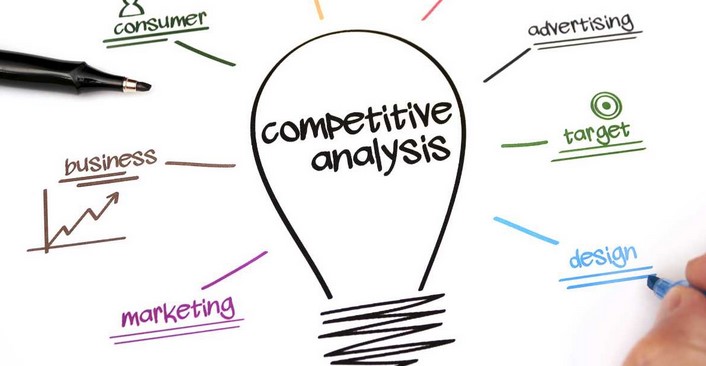
In today’s hyper-competitive business environment, staying ahead of the competition is not just a necessity, but a strategic advantage. One of the most critical tools that businesses use to understand their position in the market is competitive landscape analysis. This analysis helps businesses identify the strengths, weaknesses, opportunities, and threats posed by their competitors. By conducting a thorough competitive landscape analysis, organizations can make informed decisions, develop effective strategies, and ultimately gain a competitive edge. In this article, we will explore how to conduct competitive landscape analysis strategically, covering key steps, best practices, and how to apply the insights gained to drive business growth.
Understanding Competitive Landscape Analysis
A competitive landscape analysis involves examining the competitive environment within which your business operates. It entails studying both direct and indirect competitors, understanding market trends, customer behaviors, and evaluating the strengths and weaknesses of key players in your industry. The goal of this analysis is to provide insights into how well your business is performing relative to competitors, what strategies are driving competitor success, and where there are gaps in the market that can be capitalized on.
By strategically analyzing the competitive landscape, businesses can uncover valuable information that shapes product development, marketing tactics, pricing strategies, and overall business positioning. This process allows companies to refine their strategies and align them with market demands, ultimately enabling them to respond more quickly and effectively to changes in the competitive environment.
Steps to Conduct Competitive Landscape Analysis
1. Identify Key Competitors
The first step in any competitive landscape analysis is identifying your key competitors. This can be broken down into two categories:
- Direct Competitors: These are businesses offering products or services that are almost identical to yours and target the same customer base. For example, if you sell running shoes, direct competitors would be other companies in the footwear industry selling running shoes.
- Indirect Competitors: These companies offer different products or services but fulfill similar customer needs or desires. For example, a company selling fitness equipment might be considered an indirect competitor to your running shoe business.
It’s crucial to take both types of competitors into account to get a full understanding of the competitive landscape. Direct competitors pose a more immediate threat, but indirect competitors can also shift consumer behavior and impact your market share.
2. Analyze Competitor Products and Services
Once you’ve identified your key competitors, the next step is to assess their products and services. This involves evaluating the quality, features, pricing, and value proposition of their offerings compared to yours. By understanding how your products or services differ from those of competitors, you can uncover opportunities for differentiation or areas where you may need to improve.
Action Steps:
- Compare product features, benefits, and innovations.
- Analyze the pricing strategies of competitors.
- Evaluate customer feedback on competitors’ products through reviews, ratings, and testimonials.
This competitive product analysis helps businesses understand their position in the market and pinpoint areas where they can add more value or adjust their offerings to better meet customer needs.
3. Evaluate Marketing Strategies
A key aspect of any competitive landscape analysis is evaluating the marketing strategies employed by your competitors. This includes their online presence, advertising methods, content strategies, and customer engagement tactics. By observing how competitors promote themselves and attract customers, you can identify successful marketing channels, as well as any weaknesses in their approach that could be leveraged.
Action Steps:
- Conduct a competitive audit of competitors’ websites, blogs, and social media profiles.
- Examine their SEO strategy, keyword usage, and content marketing tactics.
- Analyze their customer engagement techniques, including email campaigns, loyalty programs, and influencer partnerships.
Understanding the marketing strategies of competitors will help you identify gaps in your own marketing plan and allow you to better position your business for success.
4. Assess Competitor Strengths and Weaknesses
A critical part of competitive landscape analysis is to conduct a SWOT (Strengths, Weaknesses, Opportunities, and Threats) analysis of your competitors. This will help you understand their key advantages, potential vulnerabilities, and the external factors influencing their performance.
Action Steps:
- Identify the core strengths of your competitors, such as superior customer service, innovative products, or a strong brand presence.
- Determine their weaknesses, such as poor online reviews, limited distribution channels, or a lack of product innovation.
- Evaluate external factors, such as changes in the economy, technological advancements, or regulatory shifts, that could impact their performance.
By understanding where competitors excel and where they struggle, you can leverage these insights to craft strategies that take advantage of their weaknesses or counter their strengths.
5. Monitor Market Trends and Consumer Behavior
Finally, to complete your competitive landscape analysis, it’s essential to track broader market trends and shifts in consumer behavior. This could include changes in customer preferences, technological advancements, regulatory changes, and economic conditions that may affect the competitive environment.
Action Steps:
- Use market research reports, industry publications, and online tools to track emerging trends.
- Monitor consumer behavior through social media, surveys, and focus groups.
- Stay updated on economic factors, such as inflation or shifts in disposable income, that could impact purchasing decisions.
Understanding the broader market forces at play will help you anticipate future trends, adjust your strategies accordingly, and remain competitive in a constantly evolving market landscape.
Best Practices for Leveraging Competitive Insights
Once you’ve gathered all the data from your competitive landscape analysis, the next step is to use these insights to inform strategic decisions. Here are a few best practices for leveraging competitive insights:
- Refine Your Value Proposition: Use your competitive analysis to clearly define what makes your products or services unique. This can help you strengthen your value proposition and differentiate yourself from competitors.
- Innovate and Differentiate: Look for areas where competitors are lacking or where market demand is not being fully met. This could provide opportunities for innovation, product improvement, or differentiation.
- Enhance Customer Experience: Customer experience is a key differentiator in most industries. Use insights from your analysis to improve the customer journey, offering better service, convenience, or personalization than your competitors.
- Adapt to Changes: Competitive landscape analysis is not a one-time exercise; it should be conducted regularly. Markets and competitors change, so it’s important to keep monitoring the competitive landscape to stay ahead.
In an increasingly competitive business environment, conducting competitive landscape analysis strategically is essential for maintaining market relevance and driving long-term growth. By identifying key competitors, analyzing their products and marketing strategies, assessing their strengths and weaknesses, and monitoring market trends, businesses can make more informed decisions, spot opportunities for differentiation, and optimize their performance. With a continuous focus on the competitive landscape, companies can stay agile, innovate in response to changing market dynamics, and position themselves for sustained success in their industry.