


Go-To-Market Strategy Examples That Win Markets
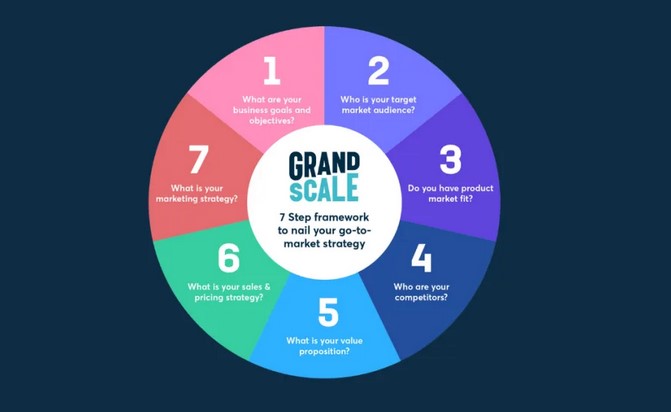
Source:https://thegrandscale.com
In today’s competitive and fast-moving business environment, launching a product or service without a clear plan is one of the most common reasons companies fail to gain traction. A well-designed Go-to-market strategy is not just about selling; it is about understanding customers, aligning internal teams, and choosing the right channels to deliver value at the right moment. This article explores innovative, real-world-inspired ideas that show how organizations can enter and dominate markets through thoughtful planning, execution, and adaptation.
1. Customer-Centric Market Entry Models
Winning markets begins with a deep understanding of the customer, not the product. Companies that build their market entry around customer problems rather than features often outperform competitors who focus solely on innovation. A customer-centric model starts by identifying a narrow, high-value audience and serving them exceptionally well before expanding.
One powerful example is the “micro-segmentation launch” approach. Instead of targeting a broad demographic, businesses analyze behavioral data to identify a small group with an urgent, unmet need. By tailoring messaging, pricing, and onboarding specifically for this group, companies can achieve faster adoption and stronger word-of-mouth growth. This approach reduces marketing waste and increases early customer loyalty.
Another effective model is outcome-based positioning. Here, the company sells a result rather than a product. Instead of highlighting technical specifications, the messaging focuses on measurable business or personal outcomes. This approach resonates particularly well in B2B markets, where decision-makers care more about efficiency, revenue impact, or risk reduction than features.
Turning Early Users into Market Advocates
Early adopters can become the most powerful growth engine if they are intentionally nurtured. Companies that create structured feedback loops, exclusive communities, and recognition programs for early users often transform them into advocates. These advocates not only validate the product but also influence purchasing decisions within their networks, accelerating market penetration without heavy advertising spend.
2. Channel Innovation and Distribution Excellence
Choosing the right distribution channels is just as important as building the right product. Traditional models often rely on a single dominant channel, such as direct sales or online advertising. However, market-winning companies experiment with hybrid and unconventional channels to meet customers where they already are.
One innovative idea is “embedded distribution.” Instead of convincing customers to adopt a standalone product, companies integrate their solution into platforms or services customers already use. This reduces friction, shortens sales cycles, and increases adoption rates. For example, software tools that integrate seamlessly into existing workflows often see higher retention because they feel like a natural extension of the user’s environment.
Another example is community-led distribution. Brands build or tap into communities centered around shared interests, professions, or challenges. Rather than pushing sales messages, they provide education, tools, and networking opportunities. Over time, trust builds, and the product becomes the preferred solution within that community. This model is particularly effective in niche markets where credibility matters more than reach.
Strategic partnerships also play a critical role in channel innovation. By partnering with complementary businesses, companies can access established customer bases and share credibility. The key to success lies in aligning incentives and ensuring that both parties deliver consistent value to the end customer.
3. Adaptive Execution and Market Feedback Loops
Even the most well-researched plan can fail if it is not adaptable. Markets evolve, customer expectations shift, and competitors respond. Companies that win markets treat their launch not as a one-time event but as an ongoing learning process.
Adaptive execution starts with clear success metrics tied to customer behavior, not vanity metrics. Instead of focusing solely on sign-ups or downloads, winning teams track activation, usage frequency, and customer satisfaction. These insights inform rapid adjustments to messaging, pricing, or onboarding experiences.
Another winning idea is phased scaling. Rather than expanding aggressively after initial success, companies deliberately slow down to refine operations, support, and product stability. This prevents reputation damage and ensures that growth is sustainable. Once the foundation is strong, scaling becomes more predictable and less risky.
Internal alignment is also critical to adaptive execution. Sales, marketing, product, and customer success teams must share the same understanding of the target customer and value proposition. Regular cross-functional reviews help identify gaps and ensure that feedback from the market translates into meaningful improvements.
Finally, successful companies embrace experimentation. They test different messages, offers, and channels simultaneously, learning what works best in real conditions. This culture of experimentation reduces fear of failure and encourages innovation at every stage of market entry.
Markets are rarely won by chance; they are won by organizations that combine customer insight, creative distribution, and disciplined execution. The examples and ideas explored in this article highlight that success comes from focusing on real customer needs, choosing channels strategically, and remaining flexible as conditions change. A thoughtfully designed Go-to-market strategy provides the structure needed to turn innovative ideas into lasting market leadership, ensuring that products do not just launch—but thrive.